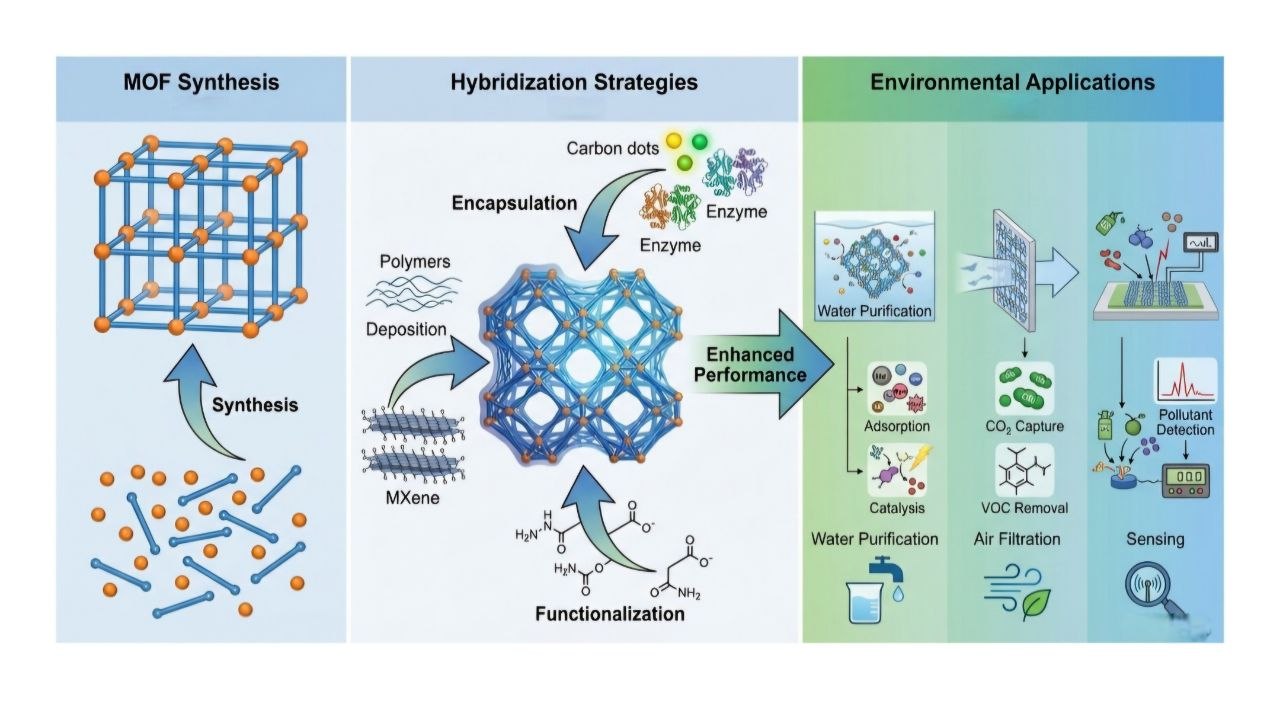
Hybrid Modification Strategies of Metal–Organic Frameworks: A Comprehensive Review on Structural Design and Environmental Applications

  • Publish Date: 30 - April - 2026

Research Abstract:

Metal–Organic Frameworks (MOFs) are a class of crystalline porous materials with unique properties, including high surface area, tunable pore sizes, and versatile chemical functionalities. These features position MOFs as essential tools in catalysis, separation, sensing, and environmental remediation, highlighting their significance in modern chemistry and practical applications. Methods: This review addresses hybrid modification strategies for MOFs, which involve integrating MOFs with secondary components such as polymers, nanoparticles, and complementary organic ligands. It further examines various synthesis methodologies, structural characterization techniques, and design strategies for crystal frameworks to control pore structures and chemical functionalities, thereby enhancing functional performance. Results: Recent studies demonstrate that hybrid MOFs exhibit improved pollutant removal efficiency, enhanced chemical sensing capabilities, and increased structural stability under diverse conditions. Precise control over pore structures and chemical functionalities has been shown to optimize hybrid performance in both environmental and industrial applications. Future Perspectives: The findings suggest that artificial intelligence (AI) and machine learning (ML) can accelerate the design, synthesis, and optimization of hybrid MOFs. Moreover, adopting green synthesis approaches using renewable resources and bio-waste represents a critical step toward developing environmentally sustainable and high-performance hybrid frameworks.

Publishers:

Reem Obaydo
- Research File:
Ebla Private University
Copyrights © 2026 All Rights Reserved - Ebla Private University

We keep pace with the accelerated course of development in Syria

EPU