Utilization of Tomato Waste Biomass as a Fluorescent Sensor for Quantification and Residual Determination of Toltrazuril in Veterinary Drugs and Milk Samples
- Publish Date: 18 - April - 2026

Research Abstract:
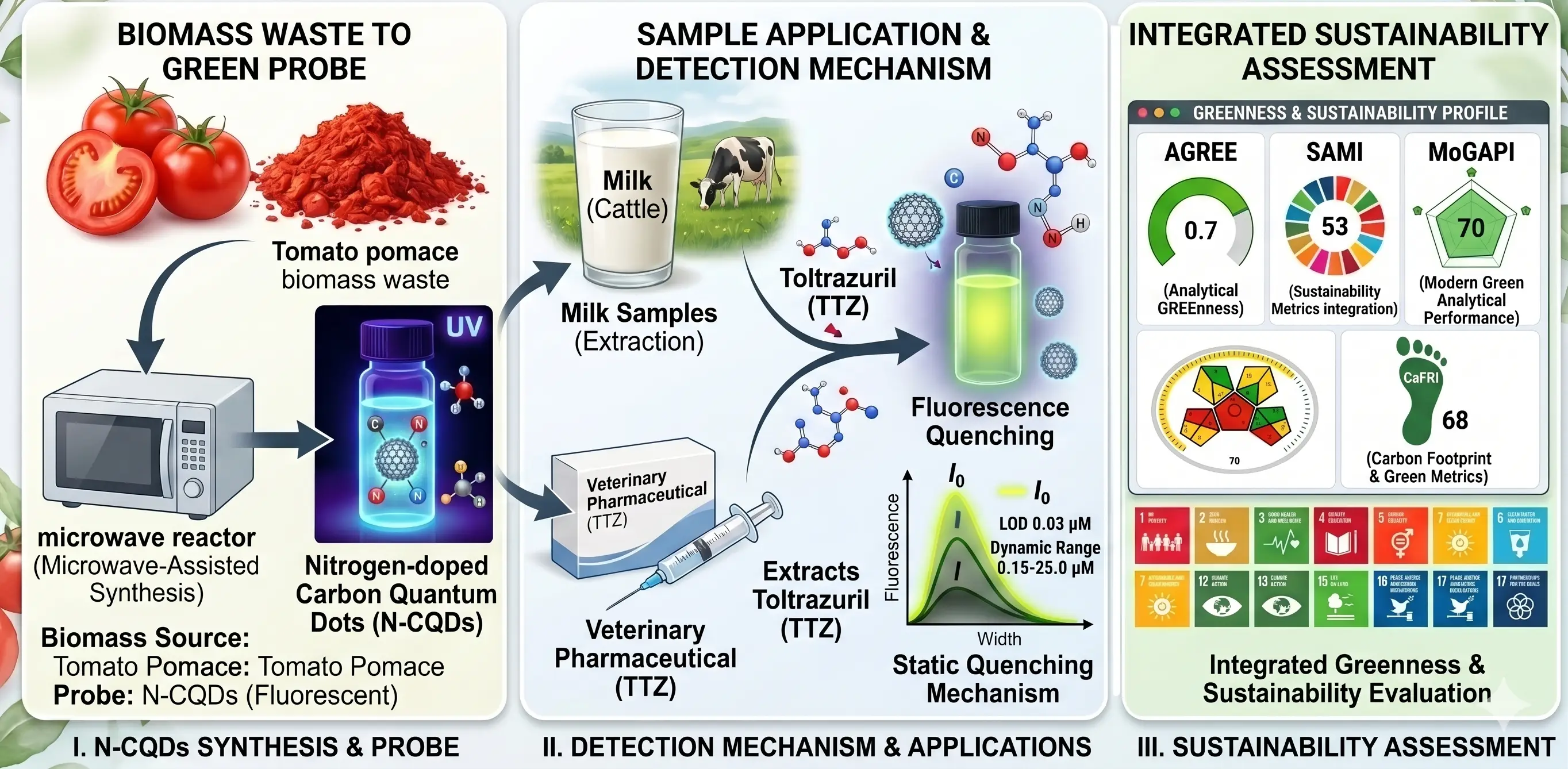
This study focuses on developing an analytical method for the determination of toltrazuril (TTZ), an antiparasitic drug widely used in veterinary medicine, particularly for protecting poultry and livestock from protozoal infections in hot and humid environmental conditions. Methodology: A fluorescent probe based on nitrogen-doped carbon quantum dots (N-CQDs) was prepared. These nanodots were synthesized using a domestic microwave-assisted method, utilizing tomato waste residues as a sustainable and low-cost biomass source. The prepared N-CQDs were applied for the first time as a fluorescent sensor for detecting TTZ in pharmaceutical formulations and milk samples. Key Results: 1. Detection mechanism: The method is based on static fluorescence quenching and demonstrated high sensitivity with a limit of detection (LOD) of 0.03 μM, within a linear range of 0.15 to 25.0 μM. 2. Practical application: The results confirmed the probe’s efficiency in monitoring food safety of animal origin and ensuring the absence of drug residues. 3. Extraction: A standardized and efficient extraction protocol was developed for isolating TTZ from cow milk samples to ensure measurement accuracy. Sustainability assessment: The proposed method was evaluated using modern green chemistry metrics such as AGREE and MoGAPI, as well as carbon footprint indicators including CaFRI, EPPI, and SAMI. The assessment confirmed that the method is not only efficient but also highly sustainable and environmentally friendly.
Publishers: